Case Study - Gateshead Clubhouse
We spoke to Billy Sayer, Trustee at Gateshead Clubhouse, about the power of a member-led mental health support hub, and how we have been able to offer a whole range of support for the Clubhouse.
In a few sentences, please tell us a bit more about Gateshead Clubhouse. What are your main aims and activities?
Gateshead Clubhouse is a member-led mental health charity and community hub for adults in Gateshead, run entirely by its members with no paid staff. Our aim is to reduce isolation and give people with lived experience of mental health difficulties a welcoming place where they can build friendships, confidence and a sense of belonging - with members having a genuine say in how the Clubhouse is run.
We offer peer support, creative and wellbeing activities, opportunities to learn and share skills, access to computers and affordable meals, but coming in for a cuppa and some company is just as important. Membership is free, participation is always a choice, and people can get involved at a pace that feels right for them.
Why did you initially reach out to Connected Voice for support?
The main reason was that we wanted practical advice and support to strengthen the Clubhouse and make it more sustainable, while protecting what makes it special: the fact that it is run by and for its members.
There is a huge amount of experience, skill and commitment within the membership, but running the Clubhouse involves much more than the activities people see when they come through the door. There are policies, finances, funding applications, administration and all the other responsibilities that keep the place going. We wanted to look at how we could manage these more effectively and bring in specialist support where it would be useful.
A big part of that was recognising that people’s health, confidence and circumstances can change. We don’t want essential responsibilities to depend too heavily on a small number of individuals, or for anyone to feel they cannot step back when they need to. Those keeping the Clubhouse running also need time to benefit from being members themselves.
We were looking for support that understood that balance: helping us strengthen the organisation without taking ownership away from the people it exists for.
The Clubhouse has had a range of support from different teams at Connected Voice. Can you tell us a bit about how this breadth of support has impacted your organisation?
The breadth of support has been particularly valuable because the things we are working on don’t sit neatly in separate boxes. Funding, member involvement, financial administration, policies and making people aware of the Clubhouse all connect with one another. Being able to draw on different areas of expertise through Connected Voice has made that much easier to approach.
Grace and Mark from the Support and Development team took the time to come along, understand the Clubhouse and talk through what we were trying to achieve. They have offered support with reviewing key policies, carried out a funding search and offered to review applications. That is particularly helpful when we are trying to find funding for practical things such as publicity, member information and travel expenses, rather than assuming every need will fit neatly into a particular funding programme.
Mark has also helped us access our OurGateshead listing so we can update the information people see about us. We have been connected with the volunteering team too, which gives us another route to explore how we can attract useful skills and support.
On the financial side, Richard (Finance Manager) visited the Clubhouse and talked through what his team could take on. We have since agreed to go ahead with financial support on a trial basis, with the aim of taking as much of the specialist administration off members as possible while keeping the appropriate decisions and oversight with the trustees. That feels like an important step towards making the Clubhouse less dependent on the continued availability of particular individuals.
Alessandra (Gateshead Digital Inclusion in Health and Social Care Project Manager) has shared useful information about digital skills, access to devices and connectivity, alongside a tool to help us understand our digital needs. We are now taking those discussions forward to explore what would be most useful for the Clubhouse and its members.
Some of this work is still developing, but the support has already given us clearer options and people we can turn to. For us, the real value is that we are not simply being given information and left to work everything out ourselves. We are building relationships with people who understand what we are trying to protect and can help us take practical steps towards it.
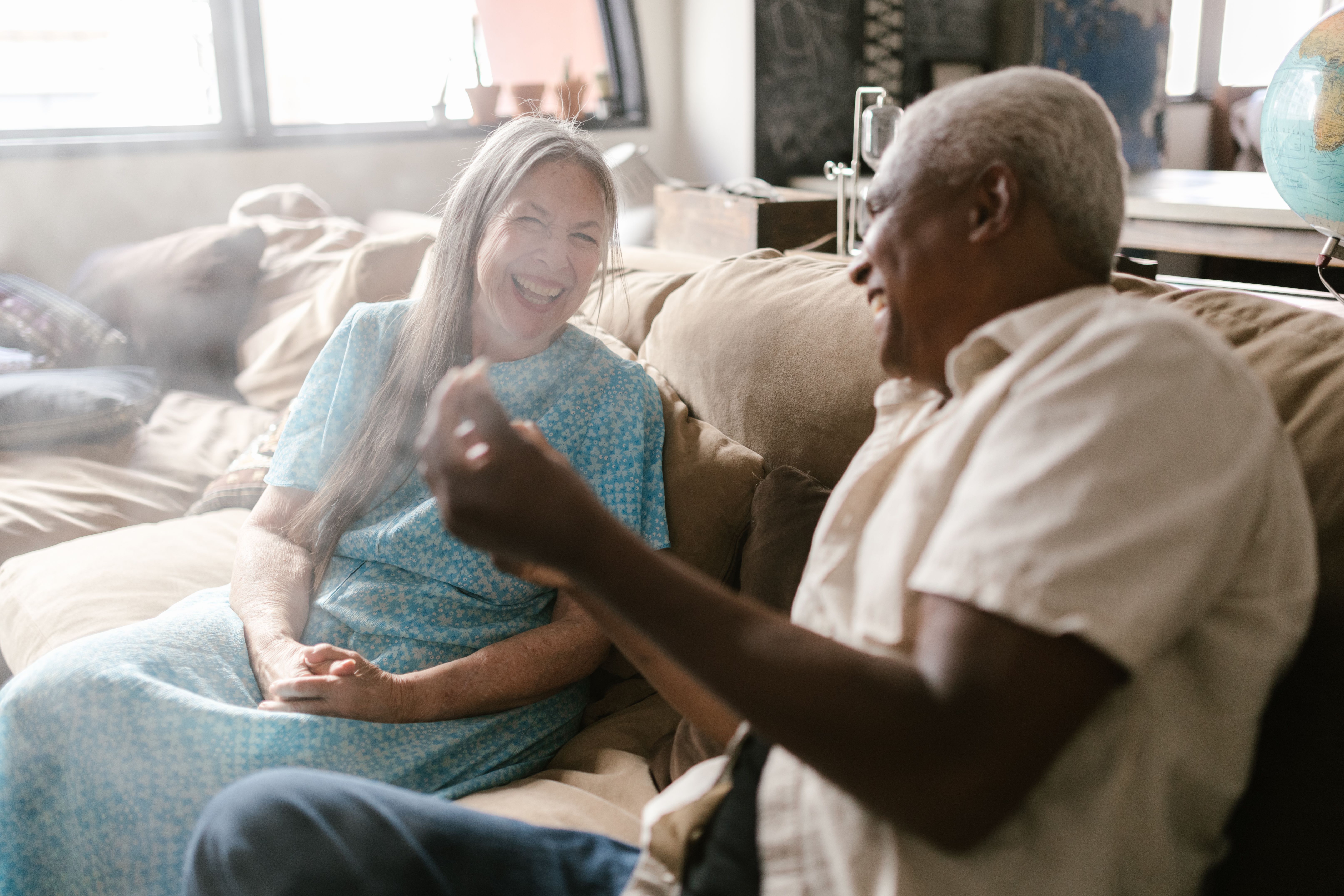
Above: A place for community and chat (Stock Image via Pexels)
What would you say to another local organisation if asked about working with Connected Voice?
I would absolutely encourage them to get in touch. You don’t need to have everything worked out before having a conversation, and you shouldn’t feel that being a small or volunteer-led organisation makes your questions any less important.
The support we’ve been given has felt approachable and relevant to us. People have taken the time to listen, talk things through and consider what would actually work for the Clubhouse, rather than assuming we need to operate in the same way as a larger organisation with paid staff.
My advice would be to explain what your organisation does, what you want to preserve and where things are becoming difficult. You may start with one question and find that there are other useful ways they can support you.
Why do you think it is important to have community mental health spaces?
People need somewhere to belong, not just somewhere to go when things have reached a crisis point. We shouldn’t underestimate the importance of ordinary things: having a reason to leave the house, seeing a familiar face, sharing a meal, having a laugh or being able to sit with other people without feeling you have to put on a brave face.
The Clubhouse offers something different from a clinical service. It is a community where people can be recognised for their interests, experience and strengths, rather than only the difficulties they may be facing. Being member-led is important to that. People have a voice in what happens and opportunities to contribute, but they are not required to take on a role or join an activity to justify being there.
Continuity also matters. Confidence and recovery do not follow the same timetable for everyone. Our approach is to let people build up their involvement at their own pace, without feeling they will be moved on before they are ready. For one person, the next step might be joining a group or helping with something; for another, it might simply be feeling comfortable enough to come in and spend time with others. Both deserve to be respected.
That is why spaces like the Clubhouse are worth protecting. The activities are important, but so is having somewhere you can feel part of a community without having to be a different version of yourself.
What would you say to someone who is interested in helping out or volunteering at the Clubhouse?
We’d be really pleased to hear from people who are passionate about mental health and would like to offer their time and relevant skills or practical support that could help us to fulfil our aims and objectives. That interest might come from their own experiences, supporting someone close to them or simply wanting to make a difference in their local community. Being member-run doesn’t mean we have to do everything without help. The right support can make a real difference while keeping members at the heart of the Clubhouse.
There are different ways someone might be able to contribute. That could be helping in the kitchen with cooking, food preparation and serving meals, helping with practical jobs around the building or supporting routine health and safety checks. It could also involve helping with an activity, administration, digital tasks, fundraising or publicity. Local businesses and professionals might be able to offer specialist advice or help us work through a particular piece of work.
We’d also want volunteering to be worthwhile for the person giving their time. Someone might enjoy meeting new people, sharing a skill or having something meaningful to do each week. For others, it could be an opportunity to learn something new, build confidence or gain experience. It should be about finding something they enjoy and feel comfortable doing, as well as something that helps the Clubhouse.
For example, someone who likes structure and routine might enjoy coming in at a regular time each week to carry out the same clearly agreed tasks. Knowing what they will be doing and who they will be working alongside could help make that a positive experience for them. Someone else might prefer helping with a creative activity, sharing a particular interest or getting involved with an occasional project. There isn’t one way of contributing that will suit everybody.
Some people might also have their own experience of mental health difficulties and be interested in becoming a member themselves, both contributing to the Clubhouse and benefiting from being part of it. That is something we could talk through individually, taking account of our membership criteria and current capacity. There is no expectation that members have to volunteer or take on responsibilities; any involvement should be a choice and something that feels manageable.
It doesn’t have to mean taking on a large or open-ended commitment. A regular contribution can be really helpful, but so can a particular skill offered for a one-off task. The starting point would be a conversation about what someone enjoys, what they can offer and what would work on both sides. We would also talk through the tasks involved and any guidance, training or support needed, so expectations are clear.
What matters most is a respectful approach and a willingness to work alongside members, building on the experience and commitment already here rather than taking over. Something that feels fairly small to one person could take a real weight off someone else. Help in the kitchen, for example, could give the members who spend much of their time preparing food more opportunity to join in activities, spend time with friends and benefit from the Clubhouse themselves. That is the kind of difference we are hoping to make.
What would you say to someone who might be interested in becoming a trustee?
We’d be very interested in speaking with people who care about community mental health and would like to help protect the Clubhouse for the future.
For us, being a trustee is about helping the charity make sound decisions, use its resources well and stay focused on what members need. It is an opportunity to contribute to the longer-term direction of the Clubhouse while respecting that it is, and should remain, a community run by and for its members.
People bring different things to that role. Experience in areas such as finance, fundraising, governance, communications or running an organisation could be useful, but we also value lived experience, good judgement and people who are prepared to listen, ask questions and work with others. It isn’t about one person having all the answers; it is about bringing together people whose experience and perspectives complement one another.
You don’t need to know every aspect of the role before asking about it. Becoming a trustee is a commitment, so we would want to talk openly about the responsibilities, the time involved and the support that would be needed. That gives someone the opportunity to understand the role properly and gives both sides a chance to consider whether it would be a good fit.
Anyone interested in exploring a trustee role, volunteering or offering practical or specialist support is welcome to email us at gateshead.clubhouse@gmail.com for an initial conversation.
Grace Simpson