
Sir James Knott Trust: A funder's perspective on the cost of living crisis
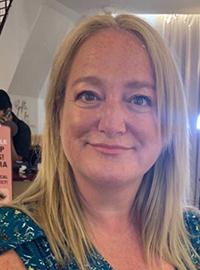
In our latest magazine focusing on the cost of living crisis, we caught up with Jo Curry from the Sir James Knott Trust, a major local family charitable trust with a focus on supporting organisations and projects that help improve the conditions of people living and working in the North East of England. When asked for a funder’s perspective on the cost of living crisis, Jo said:
“It is clear that rises in the cost of basics such as food and fuel are driving some people in the North East further into poverty. The impact on health, wellbeing and community resilience is staggering. People have tough choices to make, and they are vulnerable. Local charities will step up. Emergency food parcels will ramp up again, debt and benefit advice will continue to be offered, homelessness provision will be available, but ultimately all of this must be paid for at a time when the public do not have cash to spare. We might anticipate that fundraising events and donations will stagnate as people feel the pinch.
It is also clear that some charities are having difficulties in filling posts. It is inevitable that this year people who work in charities will expect significant pay increases, in order not to face a pay cut in real terms. In my working life, I have never seen anything more than a 2 or 3% pay increase, but for the first time, this year, a pay rise of 9% does not seem like an unreasonable expectation for employees across all sectors. With other overheads rising in charities, it would take a magician to square that circle. It is reasonable to expect that charities will come to grant funders to bridge the gap.
The current turbulence in the financial markets has a significant effect on funders like the Sir James Knott Trust. As an endowed Trust, the income of the Trust is from dividends received for the investments. Having bounced back from the downturn caused by the pandemic, now inflation and the invasion of Ukraine is causing a great deal of uncertainty. As a result, the income forecast is down, and the capital value of the endowment has been reduced. Despite this our Trustees recognise that there is a real need for funding and have pledged to continue to fund at the same level as last year and make £2.3m in grants, even if this means eating into reserves. It is not lost on us that the real value of our grants is effectively almost 10% lower this year though. As a Trust we have cautiously moved towards making larger and longer-term grants. We often make grants of £5,000 per year for 3 years towards running costs, we sometimes award £10,000 a year for 3 years and occasionally go to £15,000. It is unlikely that our grants will increase by anything like inflation. At the Sir James Knott Trust, we are pragmatic and flexible in our grant making. If it becomes apparent that the funding already made to a charity will not cover what was envisaged, then we are open to discussions about adapting the grant for example from a full time to a part time post. We have occasionally increased the grants made to a capital project.
When we receive applications that are eligible for funding, we always have more requests than we can meet. When people in communities across the North East are going hungry, or are cold, or live in unsuitable homes, it is likely that tough choices will have to be made by funders about what we fund. We are likely to fund local rather than national, and we are likely to prioritise charitable activity that provides for basic needs rather than the sorts of activities that enhance life.
We will continue to look for ways to reduce our overheads. This will include moving to smaller offices so that we will have more money for grant making. When people in communities are desperate and the charities that support them need resourcing it really is the very least that we can do.
I wouldn’t be so presumptuous as to offer tips to applicants to all funders; but if you are considering making an application to the Sir James Knott Trust, by all means telephone us to discuss what you need and how to shape the request. If you are operating as a CIC we will expect to see a realistic business plan with income based on trading. Funders will have a look at the amount of free reserves as a proportion of annual expenditure and so it is worth having a detailed reserves policy and making prudent use of designating reserves. There has always been a trend for multi-year grants to be tapered, but don’t be shy in asking for an inflation proof uplift.
Finally, if you work in or volunteer in a charity, remember that you can only do your best; you are not a miracle worker and you don’t have the macro-economic levers to immediately alleviate poverty. So, know that you are valued and make sure that you take the time to recharge your own batteries before you go again. Helping people that are in distress and managing the unmanageable is relentless. It ultimately achieves nothing if you totally burn yourself out.”
So the clear advice is to speak with your existing funders. All the costs that Jo describes are likely to continue to increase with rising inflation and the increasing costs of energy. If you’re not in the habit of budgeting ahead, now is a very good time to start. A clear itemised budget helps you identify current costs, plan for different scenarios – and crucially gives you the information you’ll need to discuss and present costs with your current and future funders. You can get in touch with our Support and Development team on 0191 232 7445 or email connect@connectedvoice.org.uk.
This article was originally published in Connected Voice Autumn 2022