If We Only Talk About Black History in October, We’ve Missed The Point
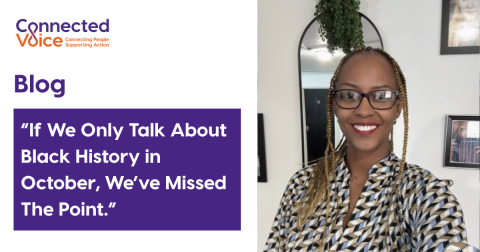
Black History Month gives us an opportunity to pause and recognise Black history, but for me, it is also a chance to think about the people, experiences and communities that have shaped who we are today.
My work through Teakisi has always been rooted in people - creating spaces where people can connect, have their voices heard and access opportunities that may not always have been available to them. Alongside this, I am also a Trustee at Connected Voice, which has given me another perspective on the role that leadership, governance and representation play in strengthening the voluntary and community sector.
Please tell us about your background and your current role at Teakisi:
I founded Teakisi in 2020, and much of my work since then has been about creating opportunities for people and communities who are often overlooked, particularly where race, gender and inequality intersect.
Teakisi has grown from an idea into a community resource delivering programmes, events, training and opportunities across the North East. My role is varied, but at its heart it is about understanding what people need, creating the right opportunities and making sure the work we do remains relevant to the communities we serve.
I am also very hands-on. I like being close to the work and the people we support rather than sitting removed from what is happening on the ground. That informs a lot of the decisions we make at Teakisi.
Why does Black History Month matter to you, personally and professionally?:
Personally, Black History Month gives me an opportunity to reflect on where I come from, the histories that shaped me and the people whose work made it possible for people like me to have the opportunities we have today.
Professionally, it connects strongly with why Teakisi exists. We talk a lot about representation, inequality and creating opportunities, but those conversations need to be grounded in an understanding of history. You cannot really understand many of the inequalities Black communities experience today without understanding what came before them.
For anyone who sees Black History Month as 'tokenistic' or simply another awareness month, I would say that depends on what we choose to do with it. If we spend October posting a few facts and then forget about Black communities for the rest of the year, then yes, it becomes tokenistic. But if it encourages people to learn, question what they have been taught, recognise contributions that have been overlooked and think about how they can create change in their own organisations and communities, then it has value.
For me, Black history should be part of our everyday understanding, not something we only talk about in October. Black History Month should not become the month when Black people are suddenly called upon to speak, deliver sessions, share their experiences or educate others simply because someone has decided they need a Black voice in the room. And that work should not be expected for free just because someone is being “given a platform”.
Platforms are important, and I am not saying those opportunities should stop. But why should they only appear in October? The same people are here all year. The same knowledge, experience and expertise exists all year. If organisations genuinely value those perspectives, they should be creating opportunities to hear and pay for that expertise throughout the year.
There is also a wider responsibility here. I also don’t believe promoting Black history, recognising Black contributions or addressing the inequalities Black people face should be left to Black people to carry. We live with those inequalities every day. Through my work with Teakisi and North East Anti Racism Coalition, I see how important it is that these conversations continue beyond October. Black people should absolutely be able to tell our own stories, shape the conversations that affect us and have a say in the decisions that impact our lives, but this work is not our responsibility alone.
This is where allies have an important role to play - joining hands, using their influence, challenging inequality, creating opportunities and continuing the work throughout the year. Black History Month can create space for those conversations, but the responsibility to keep them going should be shared.
The theme this year is ‘Honouring Our Communities’. Is there anyone in your community you would like to honour? What does community mean to you?:
Where do I start?
I would honour the men and women in my community who genuinely show up for me. The people who support me, who are honest with me, who want to see me do well and who are not only around when things are going well. That inner circle of trusted relations know who they are. And community, for me, is about those relationships. It is about people who will celebrate your successes, but who will also tell you the truth when you need to hear it. It is about being able to give as well as receive support.
Through Teakisi and Connected Voice, I have seen how important those relationships can be. Sometimes creating a space for people to meet, talk, learn from each other or simply feel understood can have a much bigger impact than we realise. That is why I like this year’s theme. Honouring communities should not only mean celebrating prominent people, it should also mean recognising the people doing the everyday work that keeps communities connected.
Why is it important for Black voices to be represented at CEO and Board level?:
Because decisions are better when the people making them understand the different experiences those decisions can affect.
Representation does not mean putting someone in a room simply to say that the room is diverse. It means ensuring people have a genuine voice, are listened to and have the opportunity to influence decisions. There are still many spaces where Black people are underrepresented in senior leadership and governance. That matters because leadership shapes priorities, culture, investment and access to opportunities.
My experiences have also shown me that representation cannot stop at getting people through the door. People need to feel supported, able to challenge, contribute and lead once they are there.
Why did you choose to become a Trustee at Connected Voice?:
I wanted to understand and contribute to the wider voluntary and community sector from a different position.
Running Teakisi gives me a very practical perspective. I understand what it is like to deliver work, build relationships, manage limited resources and try to respond to what communities actually need. Becoming a Trustee gives me the opportunity to bring that experience into a wider conversation about the sector and its future.
I also believe in bringing different perspectives into the spaces where decisions are made, particularly from people who are working at or closely connected to grassroots level. If we want organisations and systems to genuinely understand the communities they serve, those communities need to have a voice and representation within leadership too.
What are you proudest of during your time with Connected Voice?:
I am proud to be able to bring my experience and perspective into the organisation and to contribute to conversations that affect the wider voluntary and community sector.
I’m also proud of the friendships and relationships I’m building with different Board members and the Connected Voice staff. I’ve really enjoyed getting to know people beyond their titles or responsibilities, learning more about them and the amazing work they do, but also recognising that behind those roles are human beings with their own experiences, stories, challenges and perspectives.
For me, that has made the experience of being a Trustee much more personal and meaningful. It has reminded me that organisations are ultimately made up of people, and getting to know those people properly can shape how you understand and contribute to the work.
For me, trusteeship is not about having all the answers. It is about asking the right questions, bringing your experience to the table and being willing to listen (I do that a lot) to perspectives that may be different from your own.
If someone reading this was considering becoming a Trustee, what would you say to them?:
Do it. You do not need to know everything about governance before you start. You need to be willing to learn, contribute and take the responsibility seriously. And don't underestimate what you already bring. Your lived experience, professional experience, community knowledge or understanding of a particular issue can be incredibly valuable around a Board table.
I would also say to find an organisation whose values genuinely align with yours. Trusteeship is a responsibility, but it can also be a really rewarding way to use what you know to support work that matters to you.
Finally, who are your three most inspiring figures in Black history?:
My first would be the Women of Rwanda.
I cannot talk about Rwanda without thinking about the genocide against the Tutsi and the devastation it caused. But I am equally struck by what women did in the years that followed; rebuilding families, communities and a country that had been torn apart. Their resilience and contribution to rebuilding Rwanda is something I find incredibly powerful.
My second is Professor Wangari Maathai. Her work showed that women’s rights, environmental action, community organising and social change are connected. She demonstrated what can happen when someone understands that change does not always start in the places where we expect it to.
And my third is Nelson Mandela, because of what he represented not only in South Africa but across the African continent. His life, his leadership and the symbolism of his struggle continue to carry enormous weight.
All three remind me that history is not only about the people whose names we know. It is also about resilience, leadership, sacrifice and ordinary people who contribute to rebuilding and strengthening their communities. And perhaps that brings me back to this year's theme.
‘Honouring Our Communities' should not be something we do because it is October. It should influence how we recognise people, how we create opportunities, who we listen to and who we make space for throughout the year